During the ongoing conflict in Israel and Gaza, there is so much ignorance, delusion, gaslighting, bias, confusion, and actual hate in the media and social media that it's often hard to parse the truth. Unfortunately, that has not stopped the multitudes from weighing in, often to the detriment of peace and dialogue.
As a proud Jew, one group that gives me great stress is the self-hating American Jew. Okay, that term is not charitable and will shut down discussion right away, so let's instead say "the Jews of privilege" or just "confused Jews." Here is the logical progression that I've observed from this group:
I am a Jewish American
I identify with being Jewish (even if I'm only partly Jewish or didn't grow up in the community)
I am not especially observant, at least not traditionally, but I may have a strong connection to Jewish rituals like Passover, the high holidays, and shabbat -- and I like Tikkun Olam
I have a connection to nostalgic Jewish culture -- e.g., bagels, pastrami, and klezmer music -- but it's not a part of my daily life
I have grown up in the relative privilege of America, where I am safe from the hardships of previous generations, from direct hatred and violence, from existential insecurity
I am middle class, upper middle class, or wealthy, attended private schools or universities, and have been buffered from the immediate struggles that poorer Americans face (and, even if I grew up poor, my connection to those without means is now a conscious, political choice rather than an everyday reality)
I am ashamed of my privilege and feel guilty for my association with those perceived to be on the wrong side of social justice
I compensate by downplaying my own identity -- if I have any -- and seek to fill that void with something else: social justice, progressive politics, activism
My desire to fit into the progressive community -- and to signal my virtue, authenticity, allyship to the "others" -- becomes my central identity
I defer to the extreme progressive narrative about Jews, Israel, Palestine, privilege, right, wrong, race, colonialism, and history, even when it's false, simplistic, binary or imposes American political ideas onto a complex history
My own peoplehood is irrelevant
Jewish security and self-determination are meaningless
The millennia of Jewish connection to Israel are moot
Israel is evil and should not exist
Israelis and Jews are complicit if they are not actively fighting to free Palestine
From the river to the sea...
While this group is a minority of the whole (though a much greater subset of the cultural elite), their positions help justify similar confusion among non-Jews, all of whom together help continue the cycle of misinformation, propaganda, and support for outright bad actors supporting violence and death for Jews and Israelis.


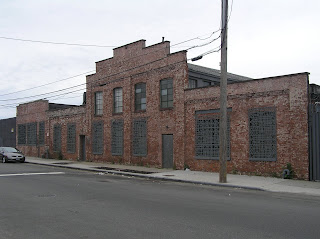


 Just south of Jackson Heights, wedged between Maspeth, Corona and the Long Island Expressway, is the appealing residential neighborhood of Elmhurst. Like Jackson Heights, it originally dates back to the pre-New York settlement of Newtown. A few early buildings survive but, like its neighbors, it was largely developed during the first half of the 20th century as a semi-suburban middle class district. Unlike Jackson Heights, though, its streets form a wild and far less oppressively right-angled grid; its architecture is more varied and warmer in tone.
 Though less commercial -- and not a cultural hub -- Elmhurst is still an immigrant mecca, hosting many East Asians, particularly Chinese; South and Central Americans, especially near Roosevelt Avenue; and a scattering of South Asians and ethnic whites.


 A discreet landmark, St. James Episcopal Church/Parish Hall is a colonial remnant from 1734 later updated with Carpenter Gothic detail. A lonely classic.

 Another home converted into a Pentecostal Indonesian church.

 Apartments from the 1910s, '20s and '30s are far more typical.


 Part of what makes the neighorhood feel so pleasant and well-scaled, though, is the abundance of early 20th century Victorians, neo-colonials, clapboard cottages and brick row houses.


 A much less-inspired complex.